Approved By All India Council for Technical Education (AICTE) New Delhi
Affiliated To Dr. A.P.J. Abdul Kalam Technical University Lucknow
Approved By All India Council for Technical Education (AICTE) New Delhi
Affiliated To Dr. A.P.J. Abdul Kalam Technical University Lucknow
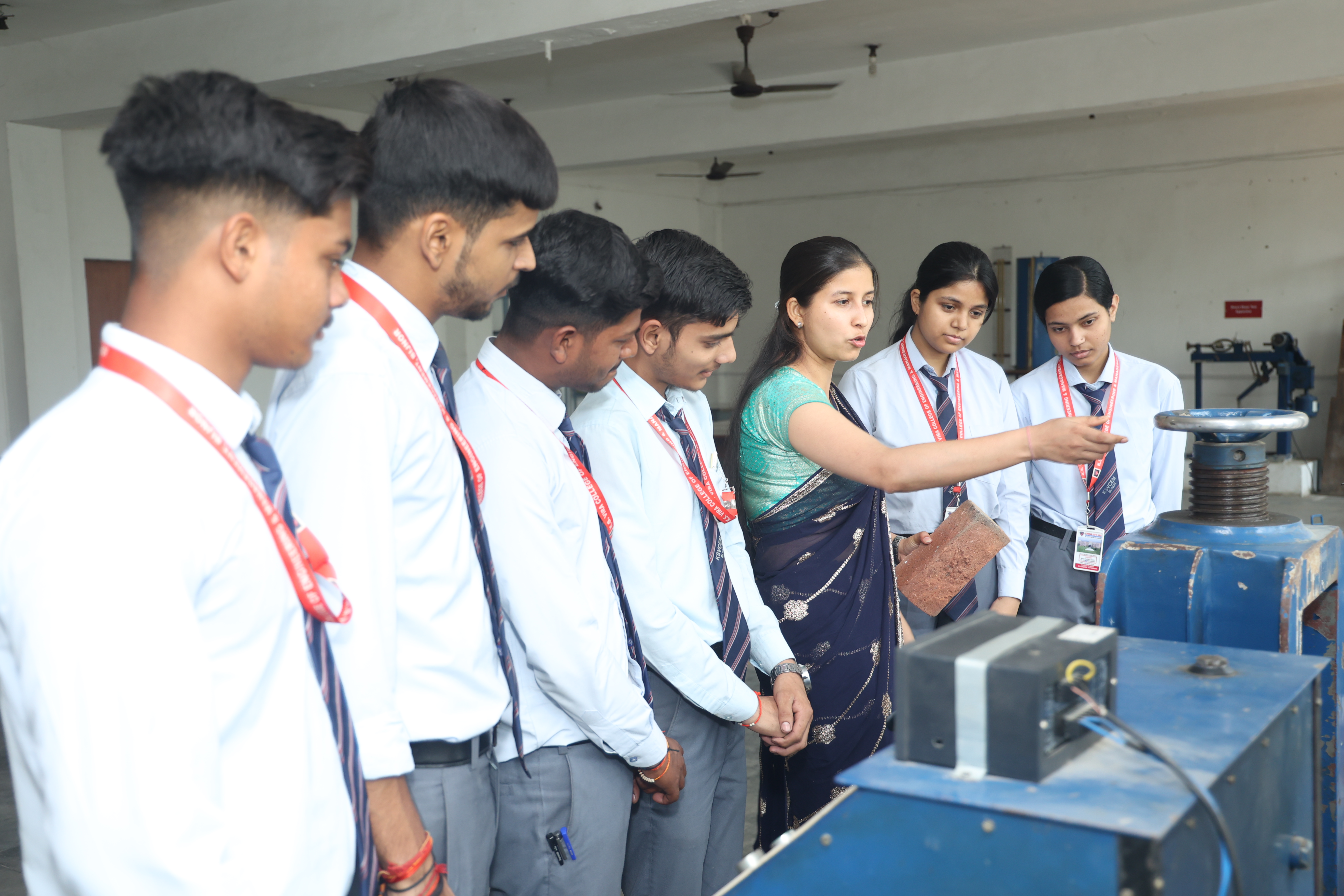
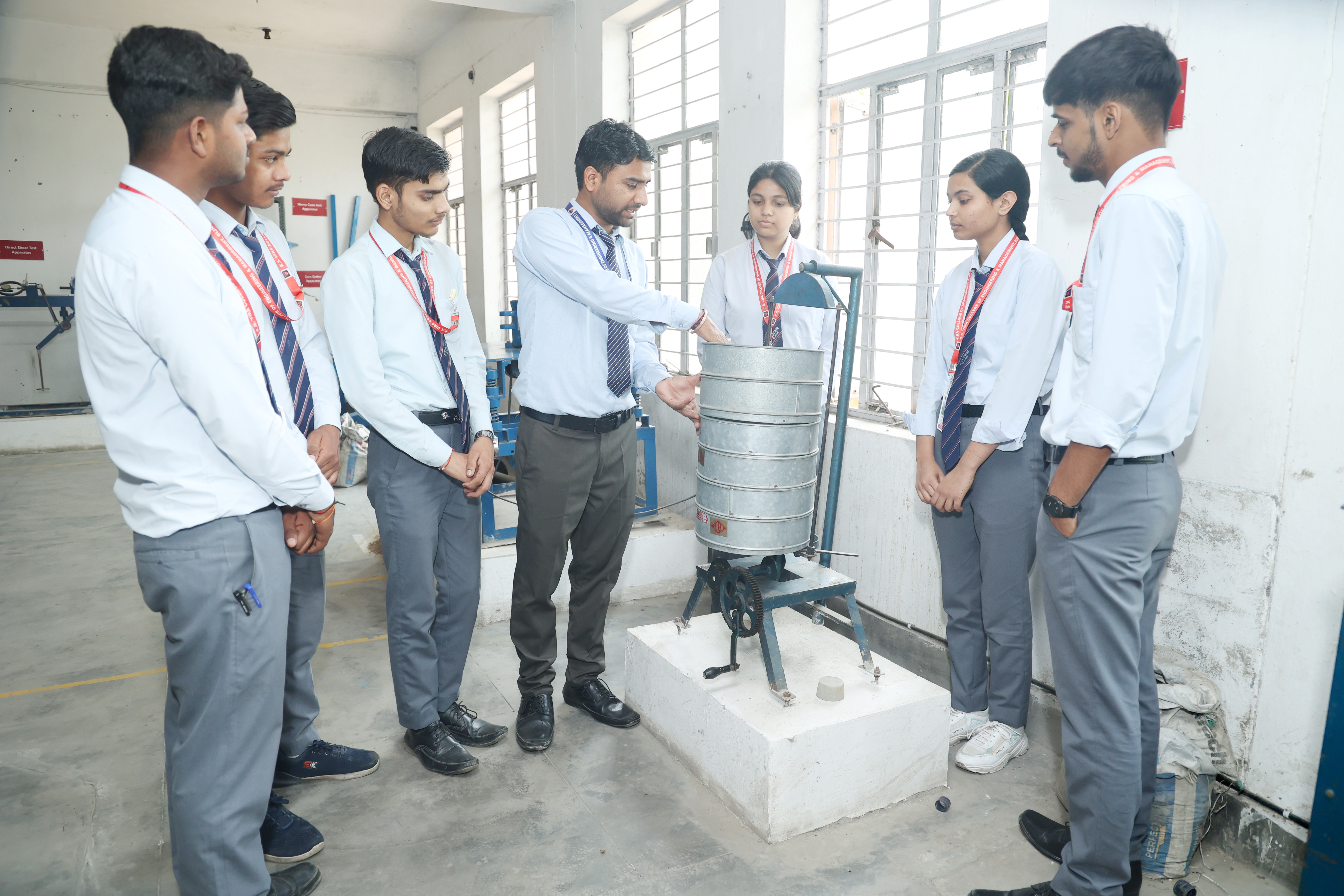
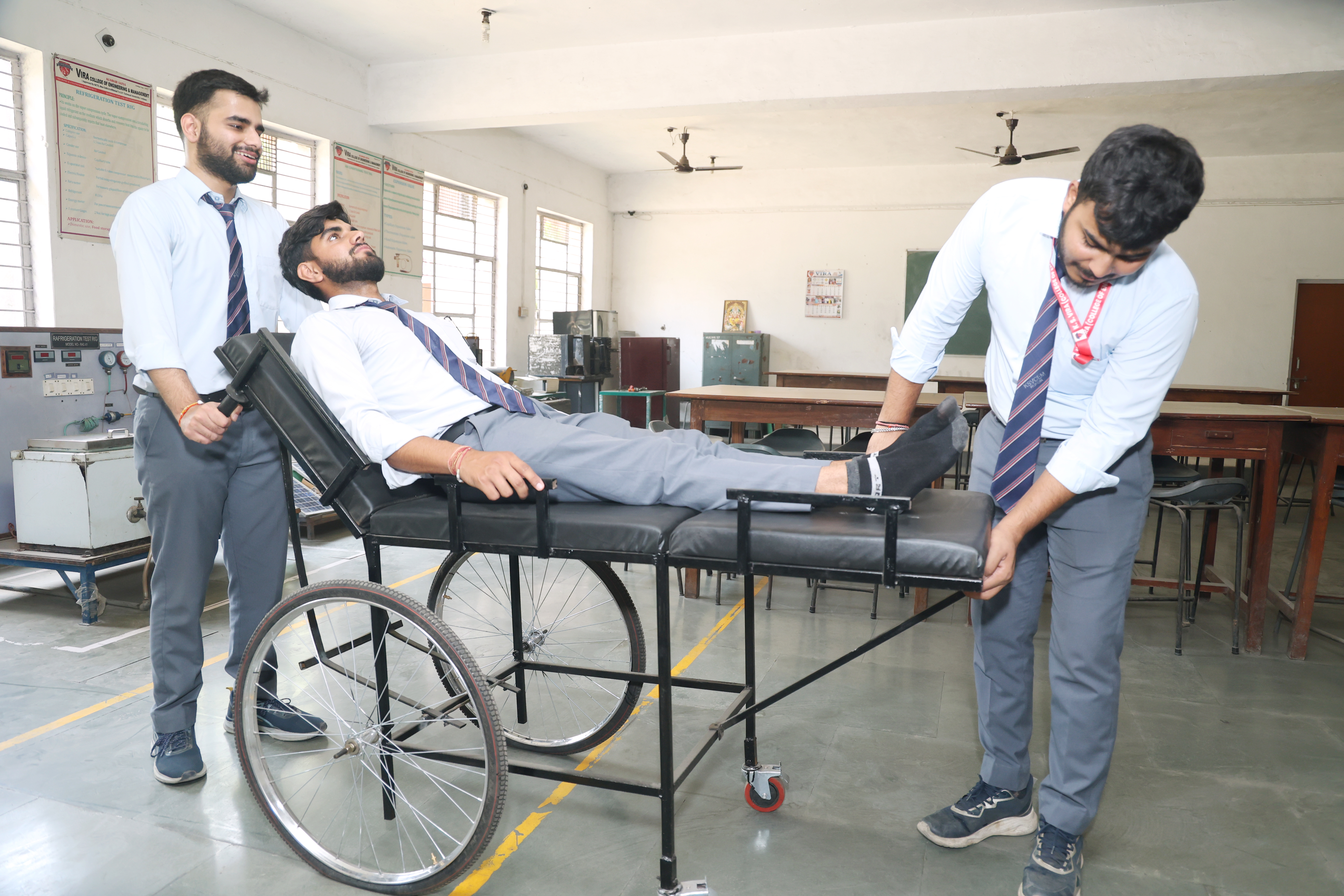
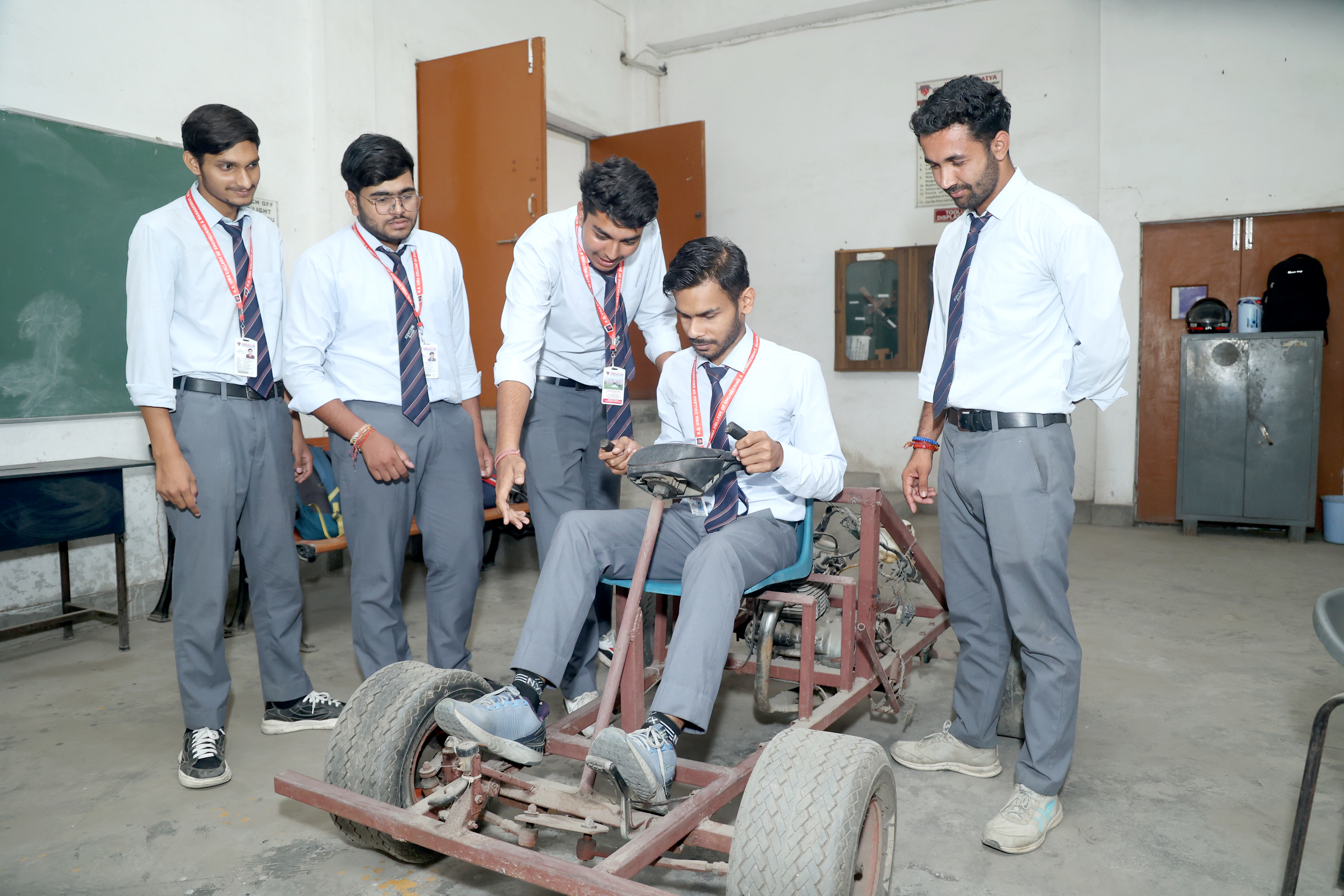
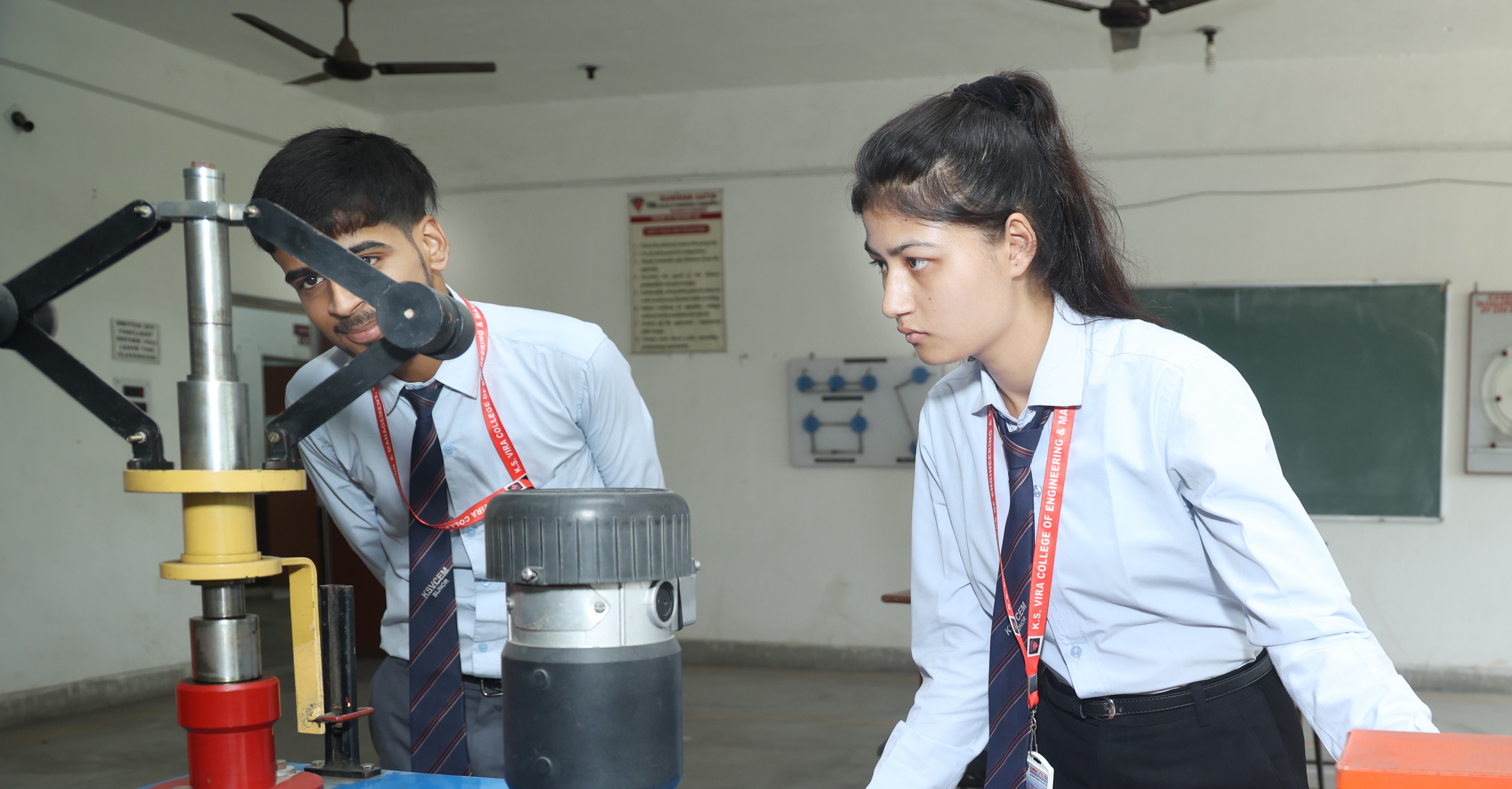
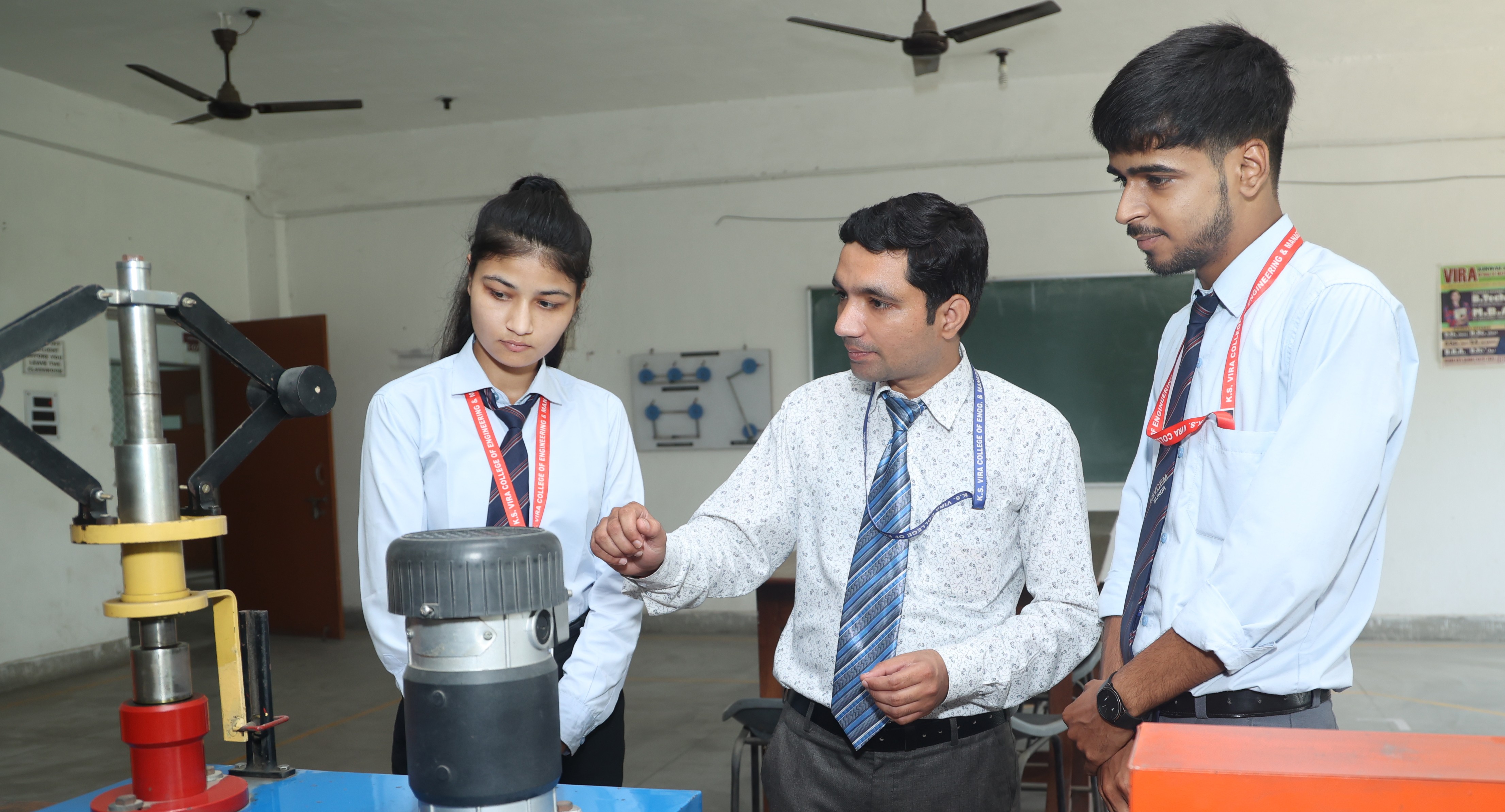
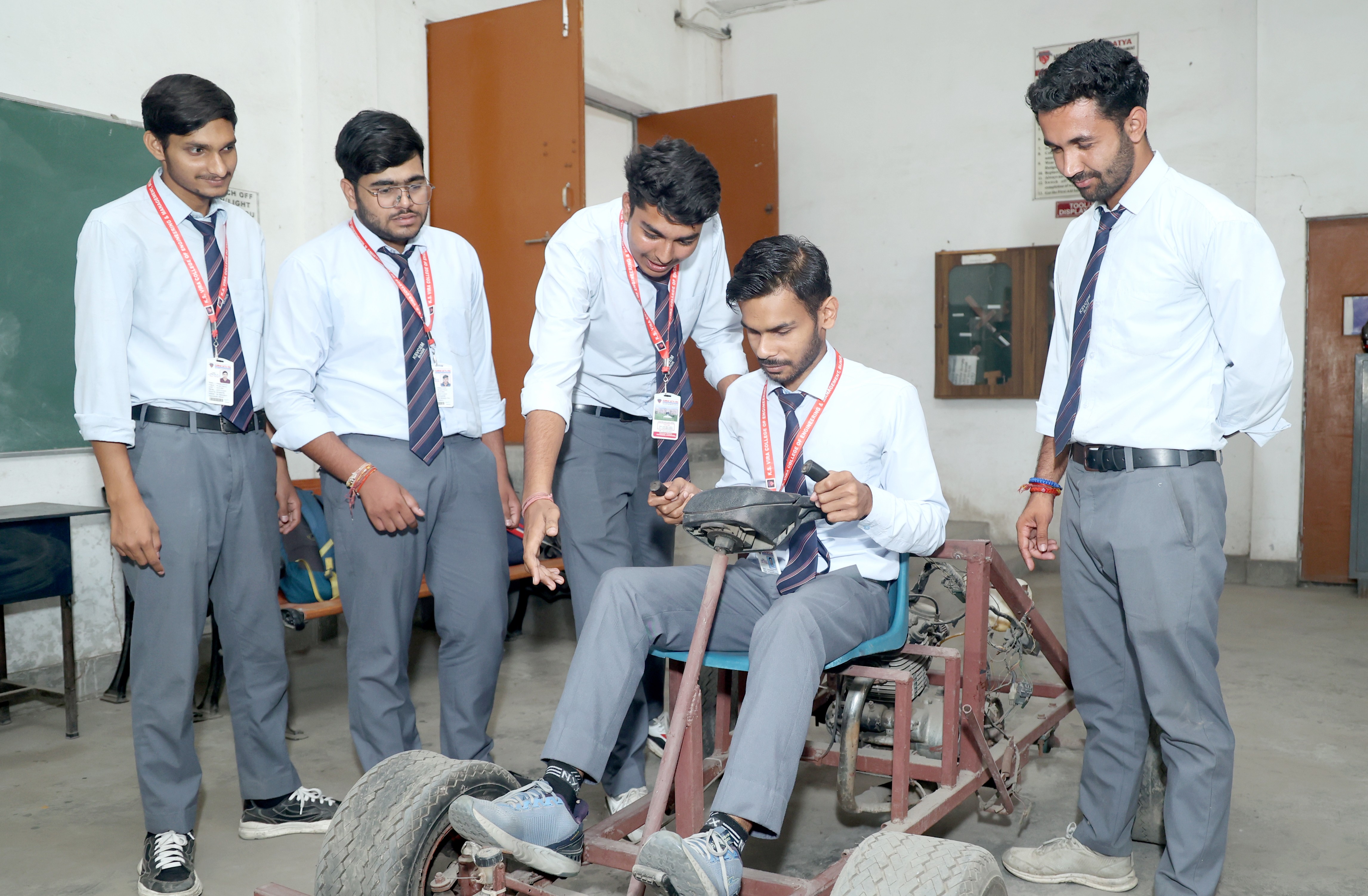
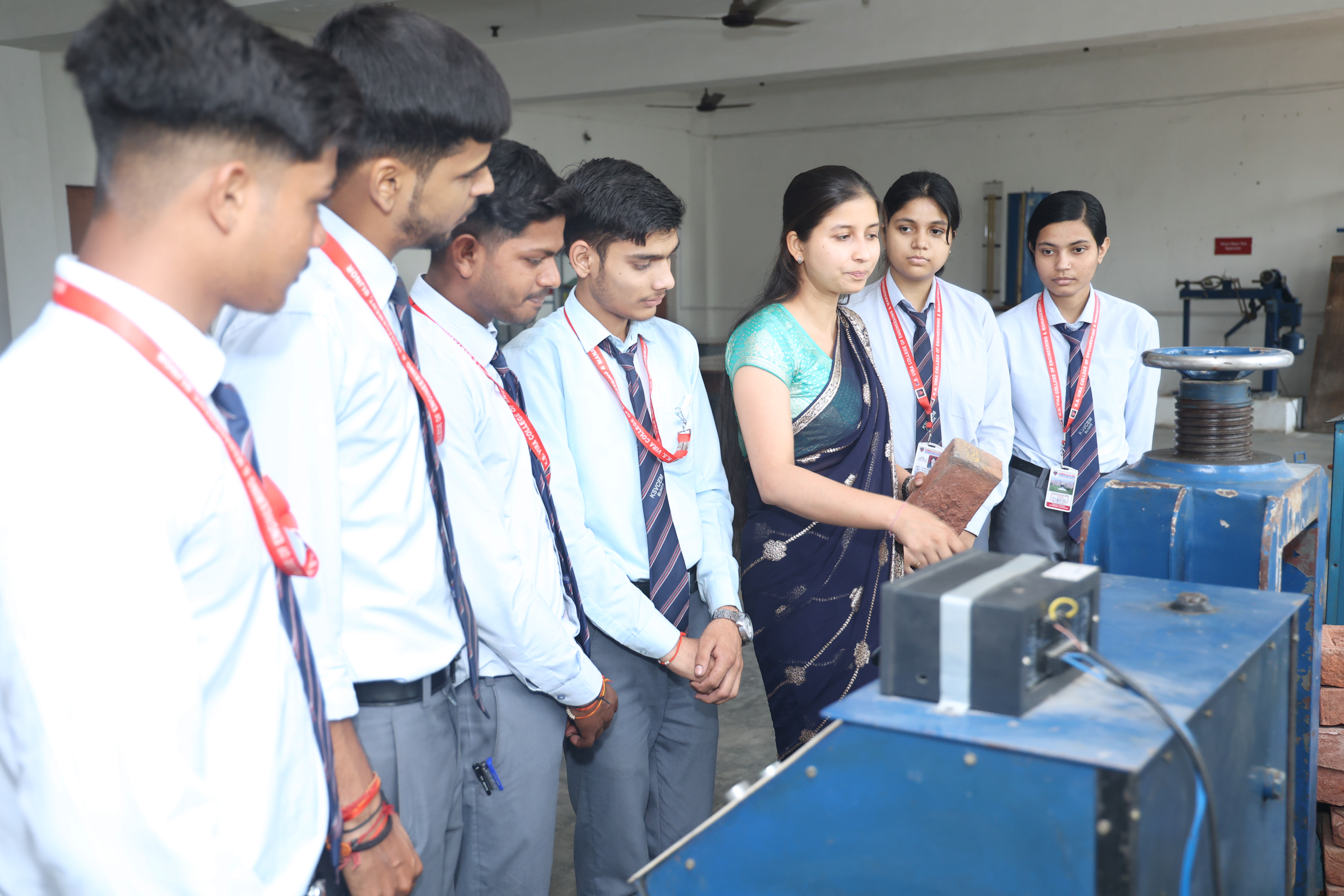
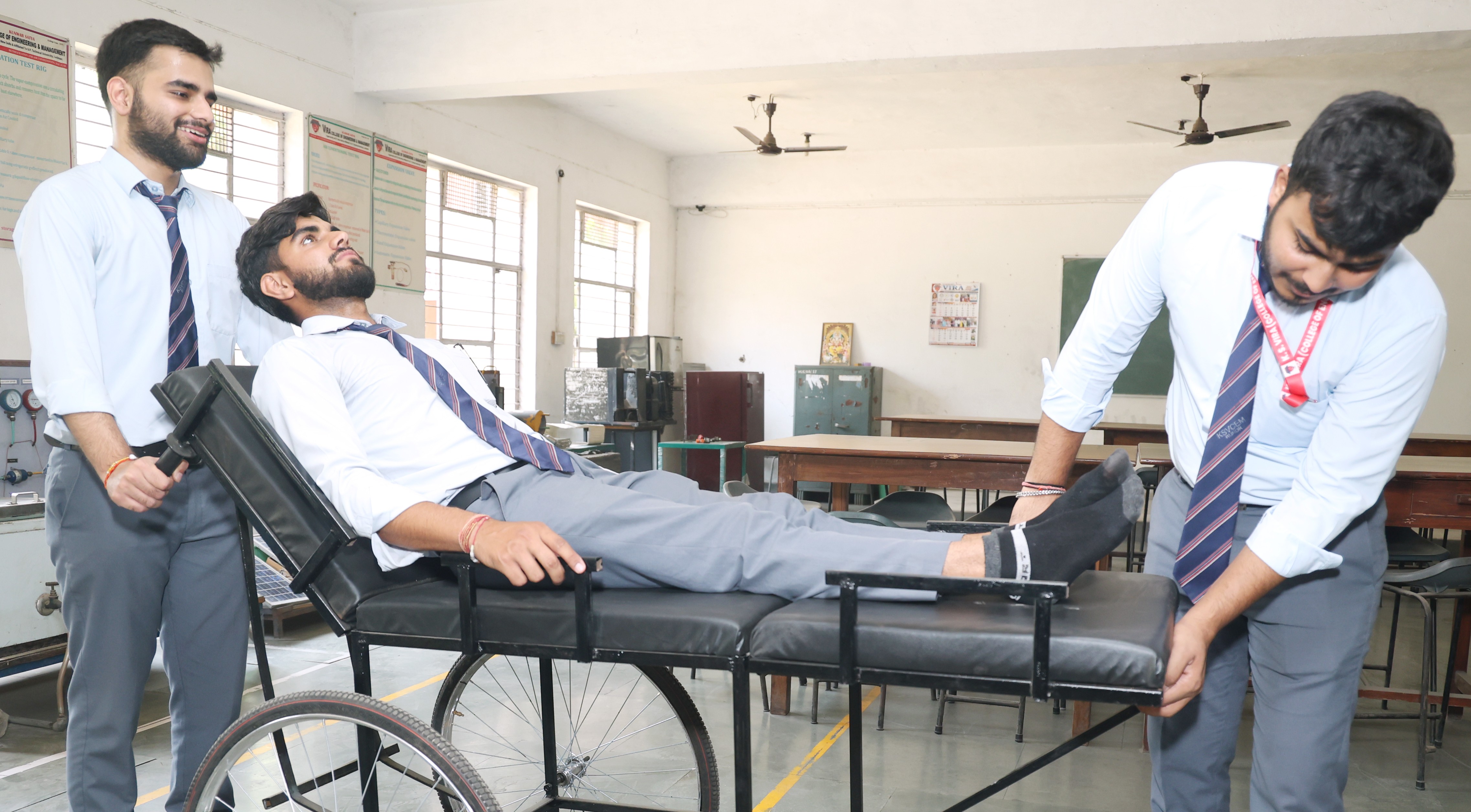
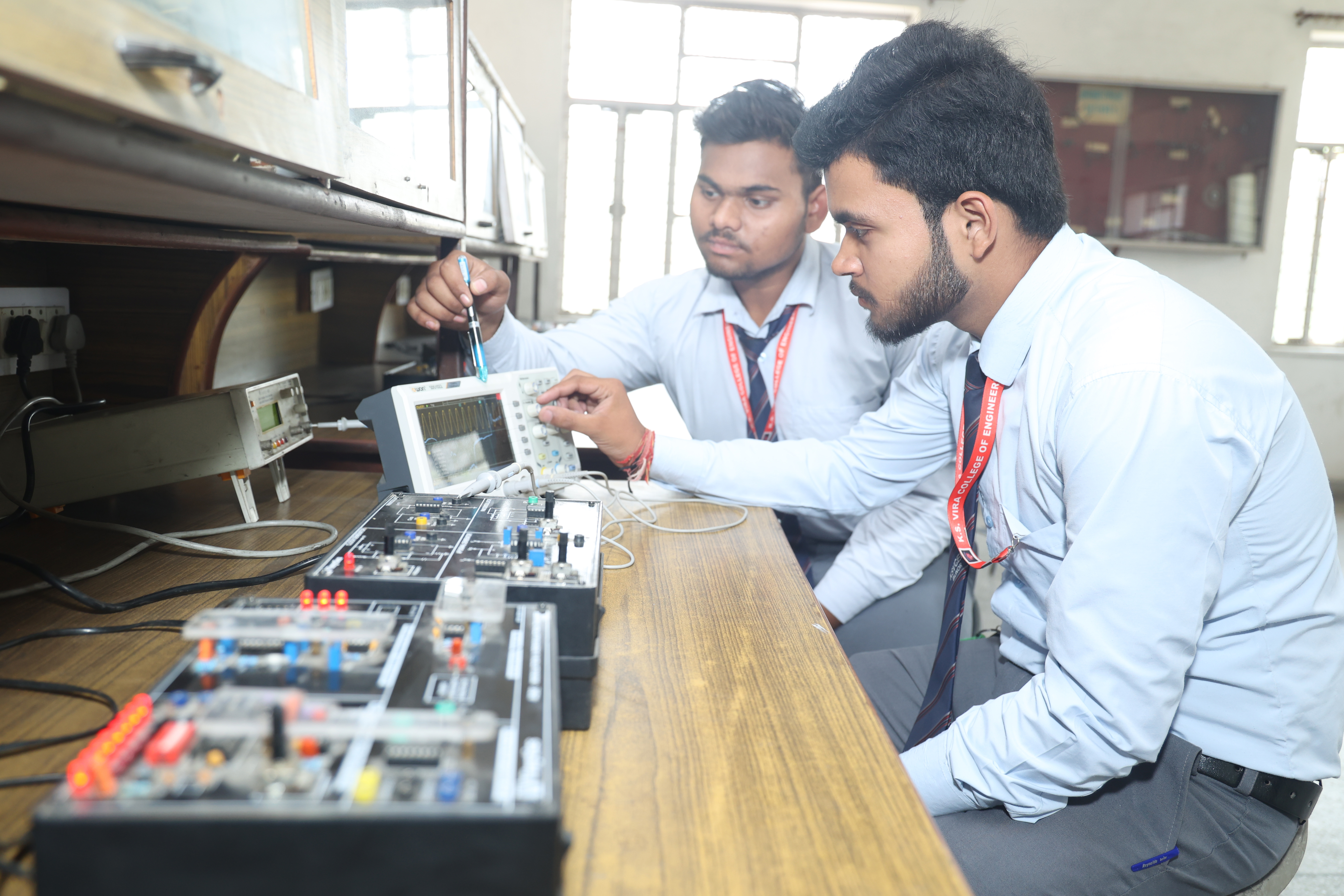
LABS, the most important part of engineering used to provide hand's on expertise on various engineering reforms. Our labs are equipped with high-end devices and advanced equipment.
Engineering Mechanics is the fundamental subject for many engineering disciplines like Mechanical, Civil, Electrical, Chemical, Aeronautical Engineering etc. Fundamental of engineering mechanics deals with mechanics of various structures and components.
The results determined at laboratories ensure about factor of safety, various types of strength, deflection, rigidity, reliability and behaviors of mechanical beams, column, trusses, struts, joints and other technological aspects. Engineering Mechanics helps in learning various principles of Mechanics used in our day to day life and provides good exposure to the students with systematic methods for solving engineering problems.
Apparatus in Mechanics Lab: Universal Testing Machine (UTM), Bell Crank Lever apparatus, Flywheel apparatus, Slider-Crank mechanism (2-stroke & 4- stroke I.C. Engine models), Simple & Compound gear train apparatus, Worm & Worm-Wheel apparatus, Belt-Pulley apparatus, Screw jack apparatus, and Impact Test (Izod/Chirpy) apparatus.
Thermodynamics subject related with physics concept like heat, pressure, entropy, enthalpy and temperature and their relation to energy and work. Thermodynamics is the study of the conversion of energy into work/heat vice versa and its relation to macroscopic variables such as temperature, volume and pressure.
In this lab there are various types of instruments which are largely used in engineering sectors from locomotives to aerospace. This lab enhances the practical skills of students and to make them understand the fundamental principles of thermodynamics. There are many applications of thermodynamics in aerospace, automobile, power plant, refrigeration cooling system, heat pump, compressor, heat exchanger and other industries.
Apparatus in Thermodynamics Lab: Petrol Engine test rig, Locomotive Boiler model, Babcock &Wilcox Boiler model, Lancashire Boiler model, Nuclear Power Plant model, Thermal Power Plant model, 4-Stroke Diesel Engine model, 2-Stroke Petrol Engine model, Steam Engine model, Velocity Compound Steam Turbine model, Air or Steam Pressure Turbine model, Water Turbine model, Radial Turbine model, Pure Reaction Turbine model, and Gas Turbine model.
The Fluid Mechanics laboratory is determine the properties of fluids (liquids/gases) and to conduct experiments involving both incompressible and compressible flow in pipes and in open channels. A specially designed boundary layer apparatus is also available to study the development of laminar and turbulent boundary layers.
Fluid mechanics deals with three aspects of the fluid: static, kinematics, and dynamics aspects. There are many applications of fluid mechanics in hydroelectric power plants, hydraulic machines, refrigerators and air conditioners, automobiles, thermal power plants, nuclear power plants, fluids as a renewable energy source, operating various instruments, heat engines etc.
Apparatus in Fluid Mechanics Lab: Meta Centric Height, Pitot Static Tube, Impact of Jet, Venturimeter & Orifice meter, Reynolds apparatus, Orifice Meter with Mouthpieces, Pipe Friction apparatus, and Wind Tunnel apparatus.
The laboratory is equipped with a wide variety of equipments in the area of refrigeration and air conditioning. It focuses on learning about the various components and performance parameter of the refrigeration and air conditioning.
Refrigeration & Air Conditioning deals with removing heat from a low-temperature reservoir and transferring it to a high-temperature reservoir. Refrigeration has had a large impact on industry, lifestyle and agriculture like that food preserving system, refrigerator, medical industry, cold treatment of metals, power plants, printing, manufacturing, photographic, computer rooms, automobile etc.
Apparatus in Refrigeration and Air Conditioning Lab: Different types of evaporators, Different types of expansion device, Window Air Conditioner, Air Conditioning test rig, Refrigeration test rig, Ice Plant test rig, Single stage single cylinder air compressor test rig, and Domestic Refrigerator.
Heat and mass transfer lab is setup to understand all the 3 modes of heat transfer, namely conduction, convection and radiation practically. The lab is equipped with linear/radial heat conduction and extended surface heat transfer apparatus.
The students carry out experiments to measure the temperature distribution and rate of he at flow. In the industry, we need to transfer heat for various operations (cooling, heating, vaporizing, condensing etc.) in various equipment like heat exchanger device, condenser, boiler, cooling device, air heater etc.
Apparatus in Heat and Mass Transfer Lab: Lagged Pipe apparatus, Pin βFin apparatus, Natural Convection apparatus, Composite Wall apparatus, Emissivity Measurement apparatus, Thermal Conductivity of Liquid apparatus, Stefan Boltzmann apparatus, Parallel and Counter Flow Heat Exchanger apparatus, Forced Convection apparatus, and Critical Radius of Insulation apparatus.
Theory of Machines is helpful to impart practical knowledge on design and analysis of mechanisms for the specified type of any motion in a various part of machine or component. The knowledge of this subject is very essential for an engineer in designing the various parts of a machine.
With the study of rigid bodies motions and forces for the transmission systems, machine kinematics and dynamics can be well understood. Various experiments with governors, gyroscopes, balancing machines and universal vibration facilities are available to understand machine dynamics.Theory of machine fundamentals are used in gears, flywheel, various parts of machine, belt & rope drive device, clutches, cams & follower, different types of mechanism used in automobile, aerospace etc.
Apparatus in Theory of Machines Lab: Beam Engine, Locomotive Coupling, Ackerman Steering, Reciprocating Engine mechanism, Model of Gears Tooth profile by use rack cutter, Universal Governor, Whirling of Shaft, Gyroscope, Static & Dynamic Balancing, Hydraulic Brake Unit, and Plate Clutch.
In the machine design lab, students gain real-world experience through laboratory experiments, analysis, computer simulation and engineering methods. The mission of machine design lab is innovative mechanical component design, improve design quality, shorten design time, and enhance design education.
The design tools are used to help companies rapidly develop high quality new products. All the mechanical components & various parts of machines are design with the help of machine design fundamental.
Apparatus in Machine Design Lab: Cotter joint model, Knuckle joint model, Riveted joint model, Flanged type rigid coupling model, Flexible coupling model, Helical spring model, Screw jack model,, Fluctuating loads model, and Various types of gears model.
Fluid machinery lab has machinery that converts the energy stored by a fluid into mechanical energy or vice versa. The energy stored by a fluid mass appears in the form of potential, kinetic and intermolecular energy. The mechanical energy, on the other hand, is usually transmitted by a rotating shaft.
Machines using liquid (mainly water, for almost all practical purposes) are termed as hydraulic machines. The common fluid machines are turbines and pumps. In the power plant industries, there are main applications of fluid machinery.
Apparatus in Fluid Machinery Lab: Reciprocating Pump, Centrifugal Pump, Francis Turbine, Pelton Wheel Turbine, Hydraulic Ram, Single Stage-Air Compressor, and Hydraulic Brake.
Mechanical Measurement & Metrology Laboratory has facility to introduce Linear Measurements, Angular and Taper Measurements, Screw Thread Measurements, Gear Measurements, Measurement of Surface Finish, Straightness, Flatness, Squaresness, Parallelism and Machine Tool Tests.
Basic Concepts of Measurements, Temperature Measurement and Miscellaneous Measurement. Tool Maker's Microscope, Metallurgical Microscopes with Specimen, Hardness Tester and Muffle Furnace, Dial Gauge Calibration Tester, Surface Roughness Tester, Profile Projector, Lever type dial Indicator.
Apparatus in Metrology & Measurement Instrument Lab: Vernier caliper, Micrometer, Universal bevel protector, Laser tachometer, Filler gauge, Sine bar, Stroboscope, Resistant Temperature Detector, Plunge Gauge, and Taper Plunge Gauge (Male& Female )
Materials science is a syncretic discipline hybridizing metallurgy, ceramics, solid-state physics, and chemistry. It represents the first example of a new academic discipline emerging by fusion rather than fission. The understanding of processing-structure-properties relationships is called the materials paradigm.
This paradigm is used to advance understanding in various research areas, including nanotechnology, biomaterials, and metallurgy. Students gain hands-on experience with material testing and analysis techniques essential for engineering applications.
Apparatus in Material Science Lab: Muffle Furnace (1000Β°C), Temperature Recorder, Mounting Press, Metallurgical microscope, Leveler, Belt grinder, Hardness tester machine, Deflection of beam, Double dice polishing machine, Rockwell and Brinell Hardness Testing machine, and Impact Testing Machine. Universal Testing Machine.
Workshop is mainly used to understand the fundamentals of engineering manufacturing processes. It provides hands-on experience with creating work pieces having defined geometric shapes and dimensions as per drawings.
Manufacturing processes are chosen based on the advantages of particular methods. Metal removal processes produce smooth surfaces, welding provides convenient fabrication methods, and sheet metal operations produce lightweight parts economically in less time. Casting process produces the most complicated shapes in single step.